- +01 (977) 2599 12
- info@domain.com
- 3146 Koontz Lane, California
Summary

Summary
Stanmag Logistics Limited (SLL) will offer transportation and logistics services throughout Tanzania. With a total of 40 trucks ranging from light to heavy, SLL can meet any transportation need and works with small to large sized businesses. Timeliness, security, and cost-efficiency are the main driving factors for the success of SLL. Through advanced technology, all transactions and deliveries are monitored to make sure that there are no delays or damages on the goods that are being transported. Every delivery is handled with the highest form of professionalism by a responsible and well-trained crew that strives to provide the best service and experience to every client.

Summary
Stanmag Logistics Limited (SLL) will offer transportation and logistics services throughout Tanzania. With a total of 40 trucks ranging from light to heavy, SLL can meet any transportation need and works with small to large sized businesses. Timeliness, security, and cost-efficiency are the main driving factors for the success of SLL. Through advanced technology, all transactions and deliveries are monitored to make sure that there are no delays or damages on the goods that are being transported. Every delivery is handled with the highest form of professionalism by a responsible and well-trained crew that strives to provide the best service and experience to every client.
| Employment | Foreign | Local | Total |
|---|---|---|---|
|
Women |
Zero |
15 |
15 |
|
Men |
5 |
110 |
115 |
|
TOTAL |
5 |
125 |
130 |

Competitive Edge
SLL Transport offers the following advantages to customers:
- Quality Service. Customers will be provided with courteous, prompt, and dependable service. SLL will develop a reputation for timely deliveries and intends to build upon that.
- Competitive rates. SLL will be able to provide competitive rates to customers because of its low cost inputs.
- Package handling. By maintaining dependable and safe equipment, SLL will ensure that there is no damage to customer's cargo.
Experience. Another major competitive advantage for SLL is the vast industry experience and solid reputation of its owner, Stanley Munai. STANMAG LOGISTIC LIMITED CONFIDENTIAL – This document is strictly confidential and the information and ideas shared within the business plan are not to be re-distributed, shared, or copied without written consent of the owner. Most importantly, SLL will establish a competitive edge through its dogged focus on on-time deliveries. Software systems, communication systems, operational choices and marketing materials will all be oriented around this goal. By making customers more assured of on-time delivery with SLL than with competitors, they will be more likely to hire SLL, as they can never be sure when a few hours can make an incredible difference to their potential revenues or expenses.
Information Technology
SLL will use the internet, email and telephone communication to disseminate information, take orders and plan deliveries. In future SLL will utilize top-of-line trucking software that tracks information detailing the location of all GPS-tagged trucks and the status of delivery, including expected arrival times for pick-up or delivery.
Tanzania Transport Sector
Overview
The Tanzanian transport sector comprises surface transport (including roads, railways), inland waterways (lakes and rivers), air transport, and sea transport. Tanzania’s transport sector contributed 8.1% to the country’s real GDP in 2018 with USD 3.8 billion, compared to USD 2.8 billion in 2014, representing an increase of 33%. STANMAG LOGISTIC LIMITED CONFIDENTIAL – This document is strictly confidential and the information and ideas shared within the business plan are not to be re-distributed, shared, or copied without written consent of the owner. Main growth drivers include the increase in the number of passengers carried and freight handled through road transport. According to Tanzania’s 2025 Development Vision, investments in infrastructure, particularly in the development of the road network, are the Government’s top priority. The World Bank (WB) and the African Development Bank (AfDB) support Tanzania in achieving its infrastructure development goals by providing grants and credits for projects.

Tanzania Road Transport
Road transport is the most widely used form of transport in Tanzania, carrying over 90% of the passengers and 75% of the freight traffic in the country. The road network in Tanzania currently comprises 86,472 kilometers of roads, of which 12,786 kilometers are trunk roads, 21,105 kilometers are regional roads and the remaining 52,581 kilometers are district, urban and feeder roads. Tanzania’s Ministry of Works, Transport, and Communication through the Tanzania National Roads Agency (TANROADS) is managing the national road network of about 33,891 kilometers, comprising 12,786 kilometers of trunk and 21,105 kilometers of regional roads. STANMAG LOGISTIC LIMITED CONFIDENTIAL – This document is strictly confidential and the information and ideas shared within the business plan are not to be re-distributed, shared, or copied without written consent of the owner. The remaining network of about 53,460 kilometers of urban, district and feeder roads is under the responsibility of the Prime Minister’s Office Regional Administration and Local Government (PMORALG).
Tanzania Rail Transport
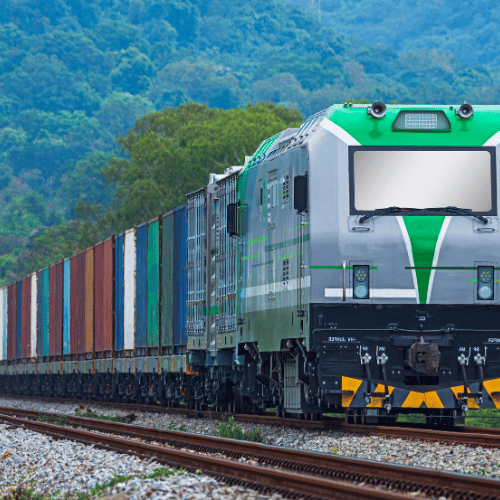
Railway transport is the second most important mode of transport after road and critical for long distance freight along the main transport corridors in Tanzania. Tanzania has a total of 3,676 kilometers of railway lines operated by two railway systems, Tanzania Railways Corporation (TRC) and Tanzania – Zambia Railways (TAZARA). The mainline of TRC comprises the central corridor between the port of Dar es Salaam in the east, linking central and western areas of the country and terminating at Kigoma on Lake Tanganyika in the west. The TAZARA line is 1,860 kilometers in length, of which 975 kilometers is in Tanzania and 885 kilometers in Zambia
Tanzania Air Transport
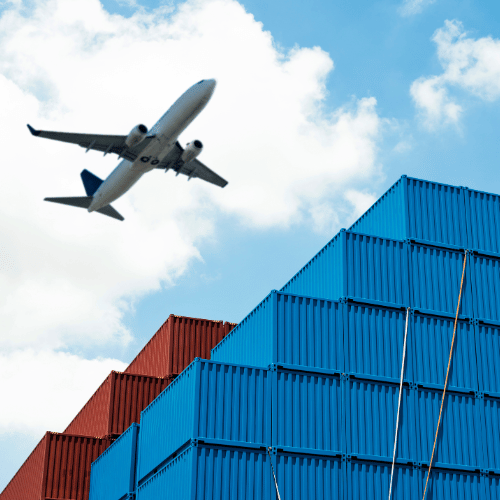
The total number of air passengers in Tanzania reached 6.2 million in 2019, compared to 5.2 million in 2015, representing an increase of 18%. STANMAG LOGISTIC LIMITED CONFIDENTIAL – This document is strictly confidential and the information and ideas shared within the business plan are not to be re-distributed, shared, or copied without written consent of the owner. Currently (2020), there are 19 airline operators in Tanzania, including some of the leading international air carriers such as British Airways, KLM, Qatar Airways, and SWISS. There are 58 airports in Tanzania and more than 300 private airstrips owned by mining companies and tour operators. The Julius Nyerere International Airport (JNIA), located in Dar es Salaam, is the largest and busiest airport in Tanzania, accounting for over 70% of Tanzania’s air passengers. In August 2019, Tanzanian President John Magufuli inaugurated Terminal 3 of the JNIA. The new terminal, which cost USD 314 million set the airport capacity at 8 million passengers annually. In 2019, the AfDB approved a USD 272.12 million loan to Tanzania for the construction of a new international airport in the capital Dodoma. The new airport will be built in the district of Msalato, 12 kilometers from the capital Dodoma. The new facility is expected to handle at least 50,000 aircrafts and one million passengers per year
Tanzania Water Transport
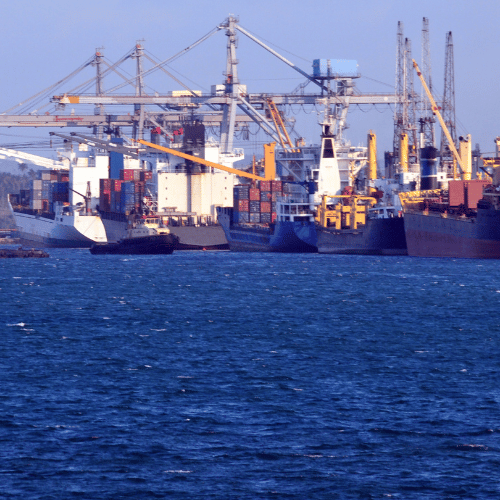
Tanzania has a coastline of about 720 kilometers on the Indian Ocean, and also borders Lake Victoria, Lake Nyasa, and Lake Tanganyika. STANMAG LOGISTIC LIMITED CONFIDENTIAL – This document is strictly confidential and the information and ideas shared within the business plan are not to be re-distributed, shared, or copied without written consent of the owner. Both sea and inland waterways ports in Tanzania are managed and operated by the Tanzania Ports Authority (TPA). The TPA’s main Indian Ocean ports are Dar es Salaam, Mtwara, and Tanga. Minor seaports serving coastal traffic include Lindi, Kilwa Masoko, Mafia Island, Bagamoyo, Pangani, and Kwale. Dar es Salaam is Tanzania’s principal port with intrinsic capacity of 10.1 tonnes per year. The port handles over 92% of the total maritime ports’ throughput The port serves land-linked countries of Malawi, Zambia, Democratic Republic of Congo, Rwanda, Burundi, and Uganda. These countries are connected to the port through two railway systems (TRL-1.0 metre gauge and TAZARA-1.067 cape gauge), road network, as well as the TAZAMA oil pipeline to Zambia. TPA also operates Tanzania’s lake ports, maintaining around 20 ports on Lake Victoria. Some major ports include Bukoba, Kemondo Bay, Musoma, and Nansio. Principal lake ports on Tanganyika include Kigoma and Kasanga. Additionally, there are 15 smaller ports along the lake. These ports provide trade connections between Burundi, Eastern Democratic Republic of the Congo, and Zambia. STANMAG LOGISTIC LIMITED CONFIDENTIAL – This document is strictly confidential and the information and ideas shared within the business plan are not to be re-distributed, shared, or copied without written consent of the owner. Lake Nyasa has 4 important ports, at Itungi, Mbamba Bay, Liuli, and Manda. There are up to 10 others smaller TPA ports on the lake that facilitate passenger movement along the lake and between the countries of Malawi, Mozambique, and Tanzania.

Tanzania Business Environment
In the African continent, TANZANIA is among the top ten investment destinations in Africa, thanks to reforms and a conducive investment environment set by the government. The Rand Merchant Bank (RMB) ranked the country tenth in investment attractiveness, in the Where to Invest in Africa 2021 report released recently.

Tanzania Development Corridors
Development of transport corridors has been one of the main strategies adopted by the Government of Tanzania to facilitate trade. Tanzania serves as a transit country for the import and export of Malawi, Zambia, DR Congo, Burundi, Rwanda and Uganda, using the port of Dar es Salaam. The main rail and road connections in Tanzania are, therefore, in an east-west direction, linking the ports with the hinterlands of those neighbouring countries. Tanzania is devoting much attention to the corridor concept in its development policy by concentrating efforts in the STANMAG LOGISTIC LIMITED CONFIDENTIAL – This document is strictly confidential and the information and ideas shared within the business plan are not to be re-distributed, shared, or copied without written consent of the owner. Mtwara Corridor, Dar-es-Salaam Corridor, Central Corridor and the Tanga Corridor. The major challenge is to link import, export and transit traffic from and to neighbouring countries with transport development efforts, making Tanzania a natural regional hub. The geography of Tanzania, including its size, diversity and dispersion, give roads a special position in the integration of the national economy. In particular, roads serve rural areas, where the majority of the people live, more effectively than any other mode of transport. The current Tanzania Road Network length is about 85,000 km, which includes trunk and regional roads (35,000 km) managed by the Tanzania National Roads Agency (TANROADS), and the urban, district and feeder roads with a total of 50,000 km, managed by Local Government Authorities (LGA). There are also some unclassified roads, such as those managed by the Tanzania National Parks Authority (TANAPA), and by the Mining Companies and village authorities.
Transport and Logistics
Overview
The SLL will engaged in the business of Transportation of Coal from Songea to Mtwara Port, the distance is about 750 km one way and the turnaround time per truck will be about 2-3 days. The coal mining companies are happy to sign long term contract if we can agree to be the dedicated transporter to transport coal from Songea Coal Mining to Mtwara Port. Currently one mining is producing about 100,000 MT of coal per month and this might increase in future. If you based on dedicated truck they need about 3,333 trucks to transport 100,000 MT per month that is about 333 trucks that carry dedicated coal for the mining company.
Fleet Size
SLL purchased 40 trucks and tipper/trailers. With capacity of carrying 30 metric tons of coal, on average one truck will conduct 10 trip per month operating for 12 months per year, carrying 144,000 metric tons per year. SLL management intends to continue building its fleet to a level of –200 trucks in the next 3 years: • Additional 60 trucks by 2023 • Additional 40 trucks by 2024 • Additional 60 trucks by 2025 Required number of trailers will also be added to existing fleet in order to cater to additional requirements in line with truck additions.
Transport Logistics is the solution.
Transport Logistics is the solution.
Benefits of optimized door to door delivery and transportation
- Transportation is dedicated to creating win-win solutions by investing talent, capital, and transport resources.
- Dynamic transport route optimization systems at clients disposal to create supply-chain door to door and reduce transport costs.
- The largest transportation truckload fleet and terminal network in the transport industry.
- Satellite tracking on our transport
- Modern fleet of transport trucks
- One of the Safest operating fleets in the transport industry
- Fully multilingual experienced transport staff to cater all our transportation routes
- Strict requirements for transport department staff and constant integrity checks transport and delivery.

SWOT Analysis
| STRENGTH | WEAKNESSES |
|---|---|
|
Promoters have sound
experience in this
business and have
talented Management. |
Stiff competition from
local market |
|
Rapid growth in sector due
to effective management
|
Limited market share
growth |